
Reviewed · KITESURF, SURF & PADDLEBOARD LESSONS
Group Kiteboarding Lesson in Tulum
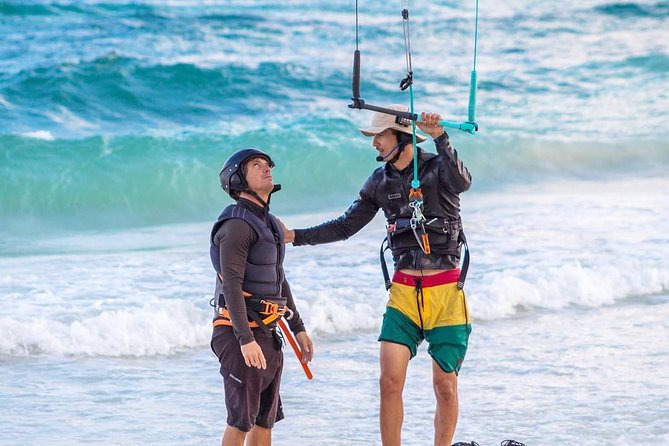
Tulum makes kiteboarding feel possible fast. In about 3 hours, you get a tight, small-group lesson with IKO-certified instructors that starts on the beach with wind and safety, then moves into the water for body control drills and first rides. I love the way the coaching builds skills in order (wind window to kite control to waterstart), and I especially like the focus on safety systems and self-rescue before you go anywhere near power. One drawback: the whole session depends on real wind, so you may need flexibility if conditions shift.
If you’re traveling with a partner or just want calm, patient coaching, this setup works well. It’s also practical: bathrooms, showers, and even Wi‑Fi are available, plus you can use paddleboarding during your experience. Just know it’s 2 customers to 1 instructor, not a giant party lesson—so expect feedback, not a crowd.
In This Review
- Quick Hits: What Makes This Tulum Kite Lesson Worth It
- Meeting at Ahau Tulum: The Start Point You’ll Actually Find
- Beach Training First: Wind Theory, Kite Setup, and Safety Systems
- Into the Water: Body Drag Upwind and Power Strokes
- Waterstarts and Your First Real Ride Options
- Wind Conditions in Tulum: Plan to Be Flexible
- Small-Group Coaching That Actually Feels Personal
- What’s Included in the $150 Price (And Why It’s Good Value)
- Who Should Book This (and Who Should Skip It)
- Should You Book This Tulum Kiteboarding Lesson?
- FAQ
- Where is the meeting point for the kiteboarding lesson?
- How long does the lesson last?
- How much does it cost?
- What language is the instruction?
- Is this a private lesson or a group lesson?
- What is the minimum age?
- What’s included in the price?
- What’s not included?
- Is it recommended for people with back problems or medical conditions?
- What happens if weather is poor?
Quick Hits: What Makes This Tulum Kite Lesson Worth It
- Wind-window coaching before you fly so you learn how to read the kite’s position, not just copy moves
- Safety system + self-rescue practice on the sand before getting pulled in the water
- Progression drills that match your energy level: body drag upwind, power strokes, then waterstarts
- Downwind to upwind riding practice so your first progress isn’t only one direction
- Small-group format (2 students) for more attention and less waiting
- Wind-flexibility built into real teaching if conditions aren’t ideal where you start
More kite, surf and paddleboard sessions along the Tulum shore
- Private Kiteboarding Lesson in Tulum★ 5.0 · 90 reviews
- Cenote Paddleboarding and Snorkeling in Tulum★ 5.0 · 80 reviews
- Lagoon Paddleboarding Tour in Tulum★ 5.0 · 27 reviews
- Paddleboard Cenote Tour★ 5.0 · 6 reviews
Meeting at Ahau Tulum: The Start Point You’ll Actually Find
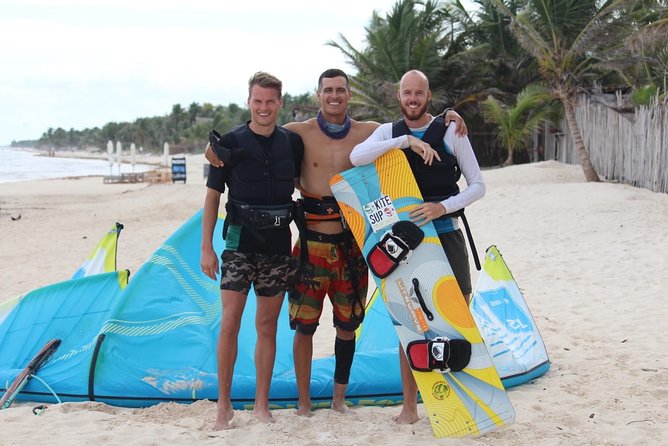
You’ll meet at Ahau Tulum, right on Carr. Tulum a Boca Paila Km. 7.5, in the Zona Costera beach area. The activity ends back at the meeting point, so you’re not dealing with a long drop-off mystery mid-experience.
Transportation isn’t included, so plan how you’ll get there. If you’re staying in Tulum town or along the hotel zone, it usually means a short ride; just don’t show up expecting someone to pick you up.
One more practical plus: the operation provides access to bathrooms and showers, which matters after beach and salt-water time. You’re also set with Wi‑Fi, which is nice for quick check-ins while you wait for the wind window to line up.
Beach Training First: Wind Theory, Kite Setup, and Safety Systems
This lesson really earns its keep by starting on land. Before anyone tries to ride, you’ll work through the beach portion like a checklist—with explanations and hands-on practice.
On the sand, you can expect:
- Kite & wind theory, including how the kite behaves relative to wind direction
- Setting up the kite and lines, so you understand what you’re actually assembling
- How the bar works—especially the inner workings and safety systems
- Self-rescue technique, so you have a plan if you lose control
- Kite control, meaning you learn how to manage power before you’re on a board
I like this approach because kitesurfing punishes guesswork. If you don’t understand how power comes from wind and kite angle, the water session can turn into frantic corrections. This portion gives you a mental model you can use right away.
It also helps to hear the instruction from coaches who work in a real teaching rhythm. In the past, students have called out coaches like Mauricio and Antonio for making the process fun and understandable. Another instructor, Beau, has been highlighted for positive, encouraging energy—exactly what you want while your brain is learning a sport that looks simple from afar.
And yes: safety drills on the beach can feel a bit unglamorous at first. But it’s the difference between hoping for the best and knowing what to do.
Into the Water: Body Drag Upwind and Power Strokes
Once kite control is in place, the lesson moves to the water with a progression that’s designed to build skill without skipping the hard parts.
You’ll work through:
- Body drag upwind
- Power strokes
Body drag upwind is where you learn to move against wind and not just get dragged wherever the kite wants. It’s not glamorous, but it trains coordination and control—two things that show up later when you’re trying to stand up and steer.
Power strokes matter because kitesurfing is basically timing. The kite provides the pull, your body provides the connection, and you learn to create traction without overpowering yourself. If you’ve never felt kite power before, this is the first moment when the sport stops being theoretical.
Also: this is where “small group” matters. With 2 customers + 1 instructor, you’re not just standing around while someone else gets the best wind. You’re getting coached through the same progression steps.
A few more Tulum tours and cenote days worth a look


Waterstarts and Your First Real Ride Options
After the basics, you’ll move into the board work. The lesson is structured so you don’t stay stuck at one skill level.
You’ll do:
- Waterstart with assistance
- Waterstart solo
- Ride downwind
- Ride upwind
- Transitions
Waterstart with assistance is a huge step because it reduces the biggest beginner struggle: timing the kite pull while finding your footing. Then solo waterstart helps confirm you can reproduce the timing without someone effectively doing the hard part for you.
The riding sequence is smart: downwind first, then upwind. Downwind usually comes easier because you’re traveling with the pull. Then upwind pushes you to use what you learned about kite position and body control to go where you want—against the wind.
Transitions are the “grown-up” part of your first session. Even if you don’t nail them perfectly on day one, the instruction gives you a direction for future practice.
In past experiences, students have described getting far enough to even ride upwind partially after multiple lessons taken close together. That makes sense: the lesson here teaches the building blocks, but true consistency is a numbers-and-wind game. If you have more time in Tulum, stacking sessions can speed up progress.
Wind Conditions in Tulum: Plan to Be Flexible
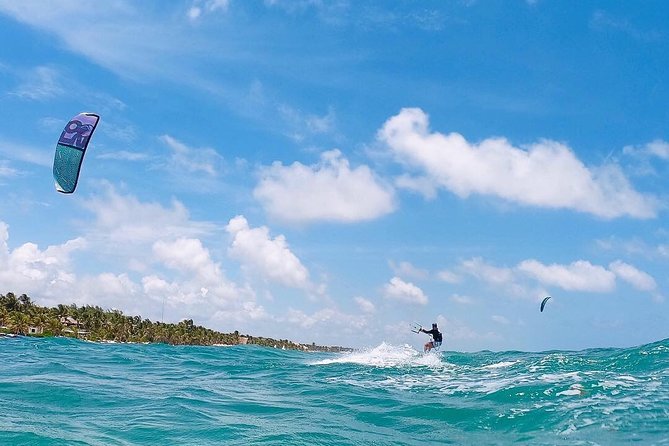
Kitesurfing lives and dies by wind. One reason this experience earns high marks is that the coaching doesn’t treat wind like an excuse—it treats it like the training variable.
In real teaching, the team may adjust timing to catch better conditions. One student noted that Mauricio messaged during the stay to shift lessons to an optimal time. Another student said Mauricio even took them to a different spot further north in El Cuyo to get the kind of wind that helps learning.
You should treat that as a “this sport is weather-dependent” reality, not a guarantee. What you can rely on is that the activity is weather-dependent, and if conditions aren’t good enough, you’ll be offered a different date or a full refund.
So bring a flexible mindset. If you’re locked into rigid schedules every hour, you’ll feel the frustration sooner.
Small-Group Coaching That Actually Feels Personal
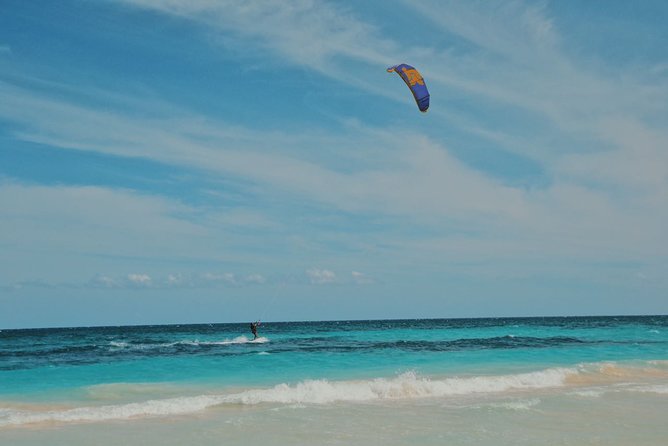
Even though it’s a group lesson, it’s not a crowded classroom. The format is 2 customers + 1 instructor, and the booking is set up so it’s still your group participating.
That ratio is valuable because kiteboarding is fast feedback. When something is off—kite angle, body position, timing—you need correction right now, not after the next person gets a turn.
The instructor role also matters. Based on names that have shown up repeatedly—Mauricio, Antonio, Beau, and Pavel—the emphasis seems to be on clear coaching and motivation, not just “good luck out there.” That style can make a sport that feels intimidating on day one feel manageable.
What’s Included in the $150 Price (And Why It’s Good Value)
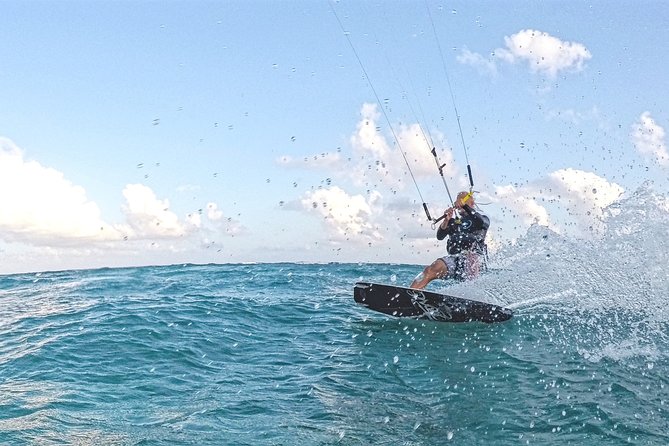
At $150 per person for about 3 hours, you’re paying for instruction, not just time on the water. Here’s what’s included:
- IKO-certified instructor
- Kiteboarding gear
- Bathrooms and showers
- Wi‑Fi
- Paddleboarding use
What isn’t included:
- Transportation
- Food and drinks
For value, I like that the cost bundles the big practical pieces. Kite gear and coaching aren’t cheap, and you don’t want to be stuck trying to rent equipment while your learning curve is already steep. This format keeps the focus on getting you from beach basics to early control on the water.
Food and drinks are not included, so don’t plan on lunch magically showing up. Still, one student mentioned a departure taco moment as a nice extra. Treat that as a possible bonus, not something you should budget as part of your meal plan.
Booking is often done about 23 days in advance on average, which is a clue that good wind windows fill up. If you’re serious about learning, don’t wait until the last minute.
Who Should Book This (and Who Should Skip It)
This lesson is a great fit if you:
- Are new or early in your kiteboarding learning curve and want a structured progression
- Like coaching that starts with fundamentals (wind theory and kite control)
- Want a small-group ratio that keeps you engaged
- Can handle moderate physical activity (you’ll be doing water drills)
It’s not a great fit if you have:
- Back problems or serious medical conditions (not recommended)
- A strong reason you can’t participate in physically active water-based drills
Minimum age is 10 years, so families can consider it—but again, only if the participant meets the physical and medical suitability guidance.
One last point: kitesurfing can be addictive. One student straight-up called it addicting, which is consistent with how the progression feels once you understand kite power and your first real board control clicks.
Should You Book This Tulum Kiteboarding Lesson?
I’d book it if you want the fastest path from beginner confusion to actual kite control—and you can stay flexible with wind. The biggest strengths are the safety-focused beach foundation, the small-group coaching, and the clear step-by-step progression all the way toward waterstarts, downwind riding, and upwind practice.
Skip it (or at least think hard) if you’re dealing with back issues or serious medical concerns, or if you’re the type of traveler who hates changing plans on a weather-dependent schedule. In kitesurfing, wind runs the show.
If you’re okay with that trade-off, this is one of the most practical ways to learn in Tulum without wasting your vacation time.
FAQ
Where is the meeting point for the kiteboarding lesson?
You’ll start at Ahau Tulum, Carr. Tulum a Boca Paila Km. 7.5, Zona Costera, Tulum Beach, 77760 Tulum, Q.R., Mexico.
How long does the lesson last?
The experience runs for about 3 hours.
How much does it cost?
It’s $150.00 per person.
What language is the instruction?
Instruction is offered in English.
Is this a private lesson or a group lesson?
It’s a private tour/activity meaning only your group participates, but the lesson format is group-based with 2 customers and 1 instructor.
What is the minimum age?
The minimum age is 10 years.
What’s included in the price?
Included: an IKO-certified instructor, kiteboarding gear, access to bathrooms, showers, and Wi‑Fi, and use of paddleboarding.
What’s not included?
Transportation and food and drinks are not included.
Is it recommended for people with back problems or medical conditions?
No. It’s not recommended for participants with back problems or serious medical conditions.
What happens if weather is poor?
This experience requires good weather. If it’s canceled due to poor weather, you’ll be offered a different date or a full refund.
More Hands-On Workshops
More Tour Reviews in Tulum




More Kite, Surf and Paddle
Not quite it? Here is more to do around Tulum we have been out and reviewed
- Tulum Taco Tour
★ 5.0 · 3 reviews - Tulum: Sport Fishing Experience with Ceviche
★ 4.0 · 3 reviews - Tulum: Half-Day Adventure Zip line Cenote in Mayan Community
★ 3.5 · 3 reviews - Tulum : Dos Ojos cenote 2 scuba dives (certified divers)
★ 5.0 · 3 reviews - Xoximilco Night Cruise With Round Transportation from Tulum City
★ 5.0 · 3 reviews
Kitesurf, Surf & Paddleboard Lessons, compared.
 ★ 5.0Private Kiteboarding Lesson in TulumFrom $27090 reviews
 ★ 5.0Cenote Paddleboarding and Snorkeling in TulumFrom $12580 reviews
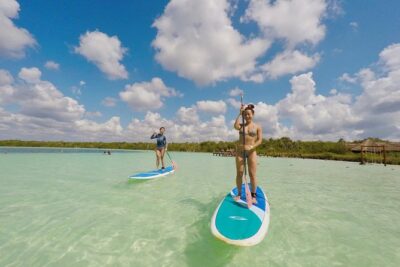 ★ 5.0Lagoon Paddleboarding Tour in TulumFrom $12527 reviews
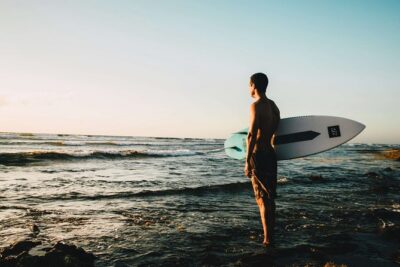 ★ 5.0Basic Surf Lessons in TulumFrom $5121 reviews
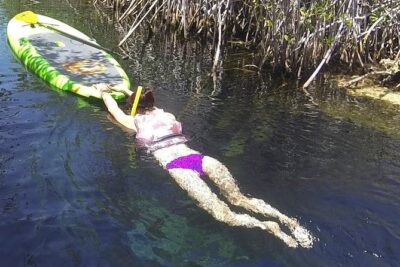 ★ 5.0Paddleboard Cenote Tour6 reviews
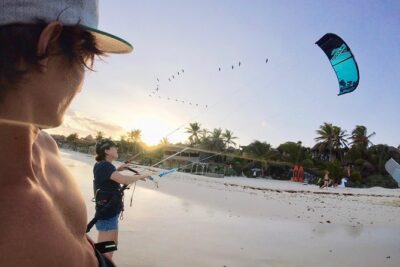 ★ 5.0Private Kitesurfing Lessons in Tulum with a Private Beach Access 3hrs3 reviews
 ★ 5.0Ultimate Surf Lesson in Tulum 1hr3 reviews
Browse the lists this tour appears in